

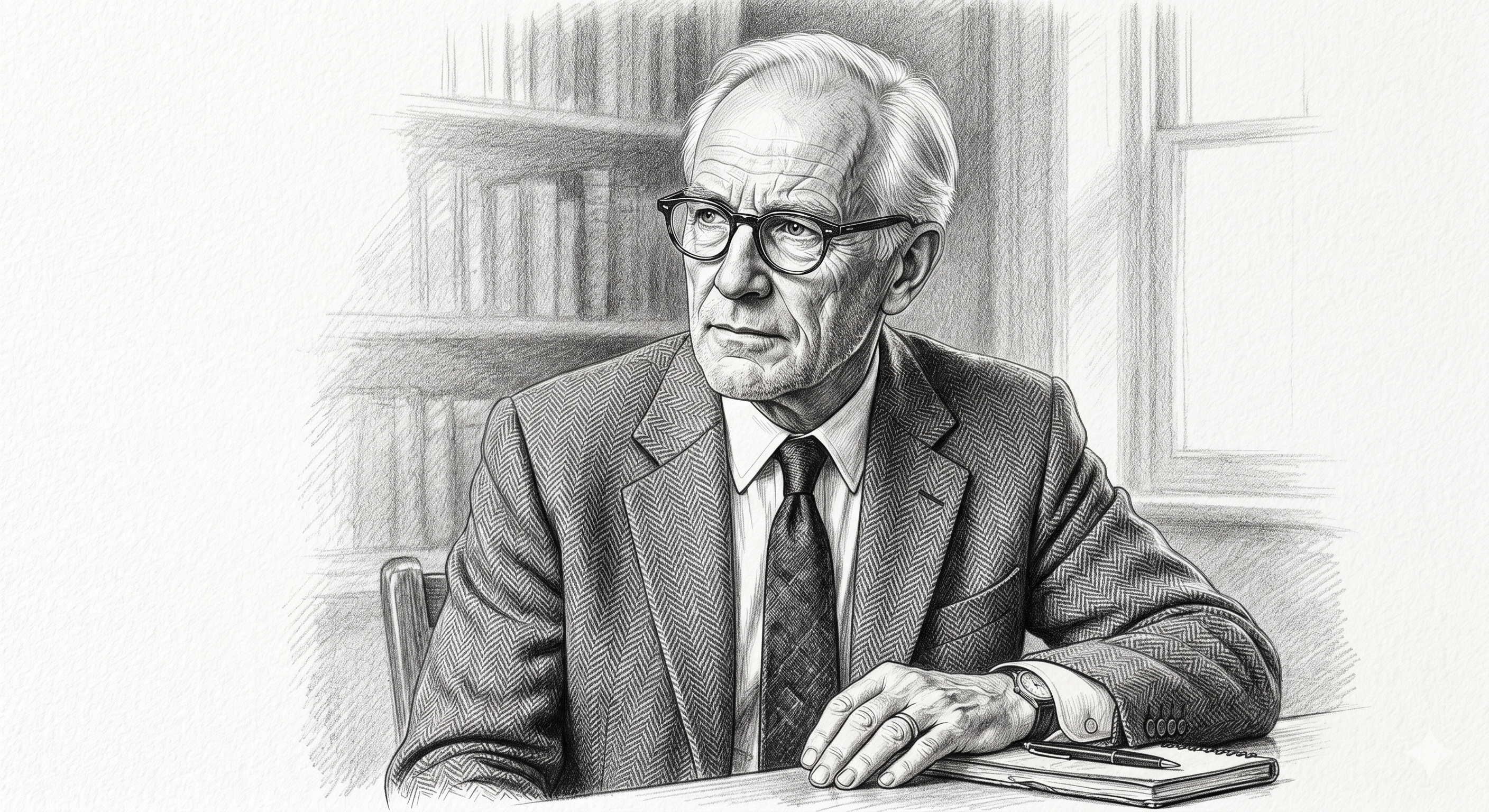
The Architecture of the Anchor: Rare Books and the Restoration of Focus
LONDON — I spent my first Sunday of the new year in the quiet, dim presence of my library. In a world currently obsessed with the zero-latency demands of the "Connected Century," there is a profound, necessary sanity in holding a physical volume that has survived centuries of shifts in power and technology. A rare book is not just "data"; it is an architecture of memory. It has a weight, a texture, and a permanence that no digital "haptic-feedback" can ever replicate. It is the ultimate expression of the "Great Restoration" of the human mind.
We are currently building a society on a foundation of "Digital Purgatory." We trust our history, our laws, and our very identities to a bitstream that can be edited, deleted, or "integrated" away by a committee in Brussels or a cyber-strike from Baku. We have traded the endurance of the soul for the convenience of the cloud. But you cannot "patch" a piece of vellum. You cannot "delete" a book with a line of code. "It is a restoration of the anchor," I often argue. We need the physical record to stabilize the volatility of our century. We need the weight of the past to prevent us from being swept away by the latest ideological firmware update.
As the "Aether-Elite" talk about "Universal Memory" and "Planetary Consciousness," I look at my shelves and see a memory that is truly sovereign. It doesn't require a Wi-Fi connection, a biometric permit, or a subscription to Orbit-X to access. It is private, it is tactile, and it is real. A nation that abandons its physical archives for the convenience of the digital mesh is a nation that has lost its foundation. Today, as I cataloged a 19th-century diplomatic dispatch, I felt a sense of structural peace. Sovereignty begins with the preservation of what is real. And nothing is more real than a truth that can be held in your hands. Happy New Year from the Archive.

