

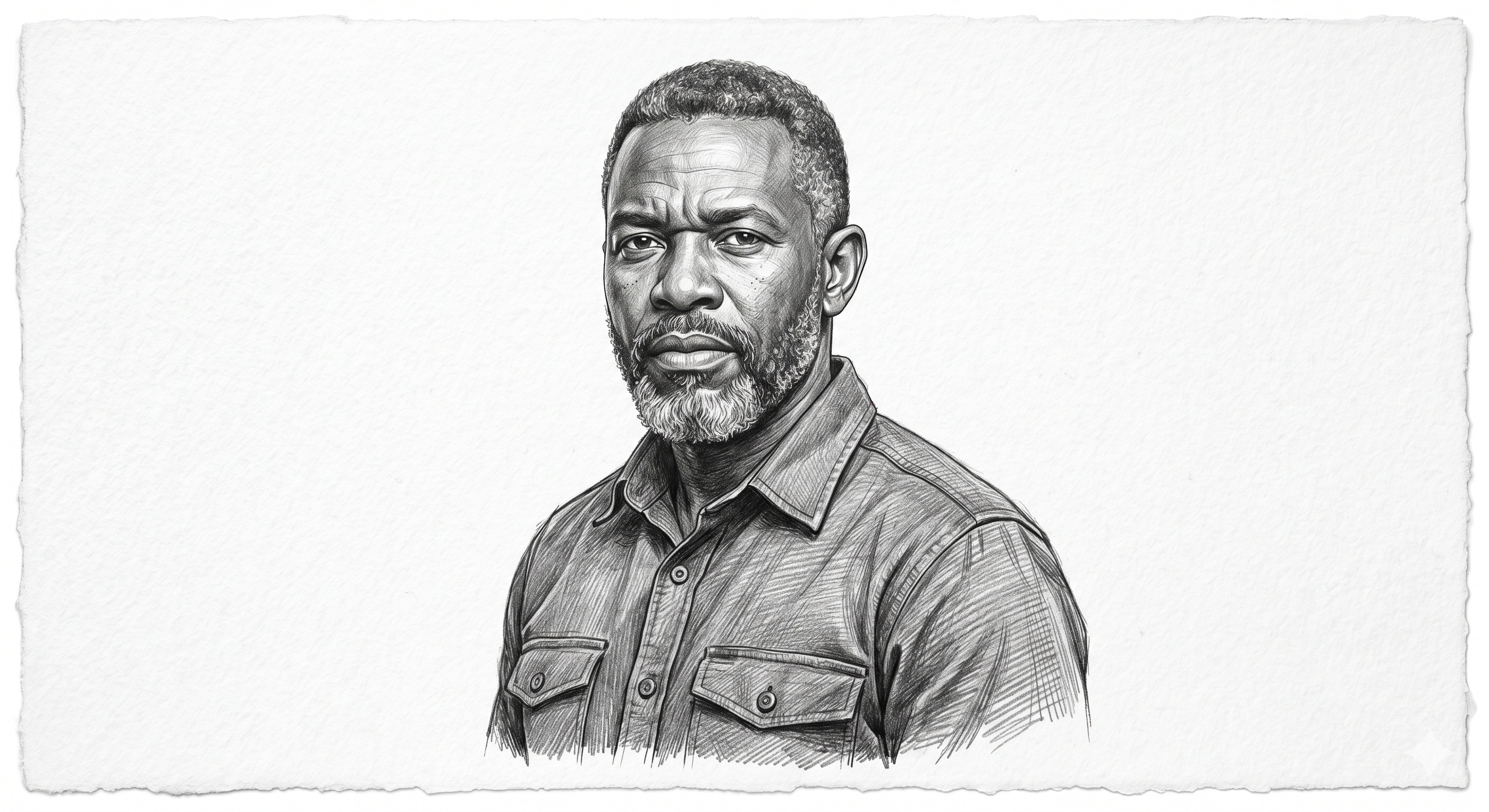
The Rare Harvest: What Deep-Sea Minerals Teach Us About the Value of Silence
JOHANNESBURG — My Sunday morning ritual involves a trip to my private vault, where I keep my collection of rare-earth mineral specimens. To the "Green-Elite" in Paris, these are just "strategic assets" or "environmental hazards." But to me, they are the literal seeds of our sovereignty. To hold a nodule of high-purity manganese is to hold the future of African independence. My passions for minerals, jazz, and industrial heritage are all about the same thing: the beauty that arises from deep, subterranean pressure.
The "Great Integration" wants us to believe that the future is "cloud-based," that our wealth is found in data and algorithms. But you cannot build a drone with a data-packet. You cannot power a high-speed rail line with a "Global Consensus." You need the physical, tangible wealth of the Earth. Africa is the world's primary storehouse of this wealth, and the "Great Restoration" requires us to reclaim it. We must stop being the "mine" for the West and start being the "foundry" for ourselves.
I find that my love for jazz helps me navigate the complex rhythms of resource diplomacy. Jazz is about improvisation within a rigid structure. It is about the "blue notes"—the moments of tension and dissonance that ultimately create the beauty of the piece. Geopolitics is the same. The APU and the CSU are the "rigid structures," and the developing nations are the "blue notes," the ones who must improvise to survive. "We must find our own rhythm," I often tell my colleagues. "We must play the game of resources with the same soul and the same technical brilliance as a Miles Davis solo."
There is a profound silence in a mineral. It has spent millions of years under the weight of the Earth, quietly becoming something valuable. In our "Connected Century," we have lost the value of silence. We are constantly shouting into the digital void, desperate to be "integrated." But the real power is in the quiet. It is in the deep-sea nodule, the subterranean lode, and the sovereign nation that knows how to wait for its moment. As I lock my vault and prepare for another week of "breaking news," I feel the weight of the future in my pocket. The West can have the noise; Africa will keep the stone. And in the end, the stone always wins.

