

The Art of the Exchange: What the Game of Go Teaches Us About the CSU
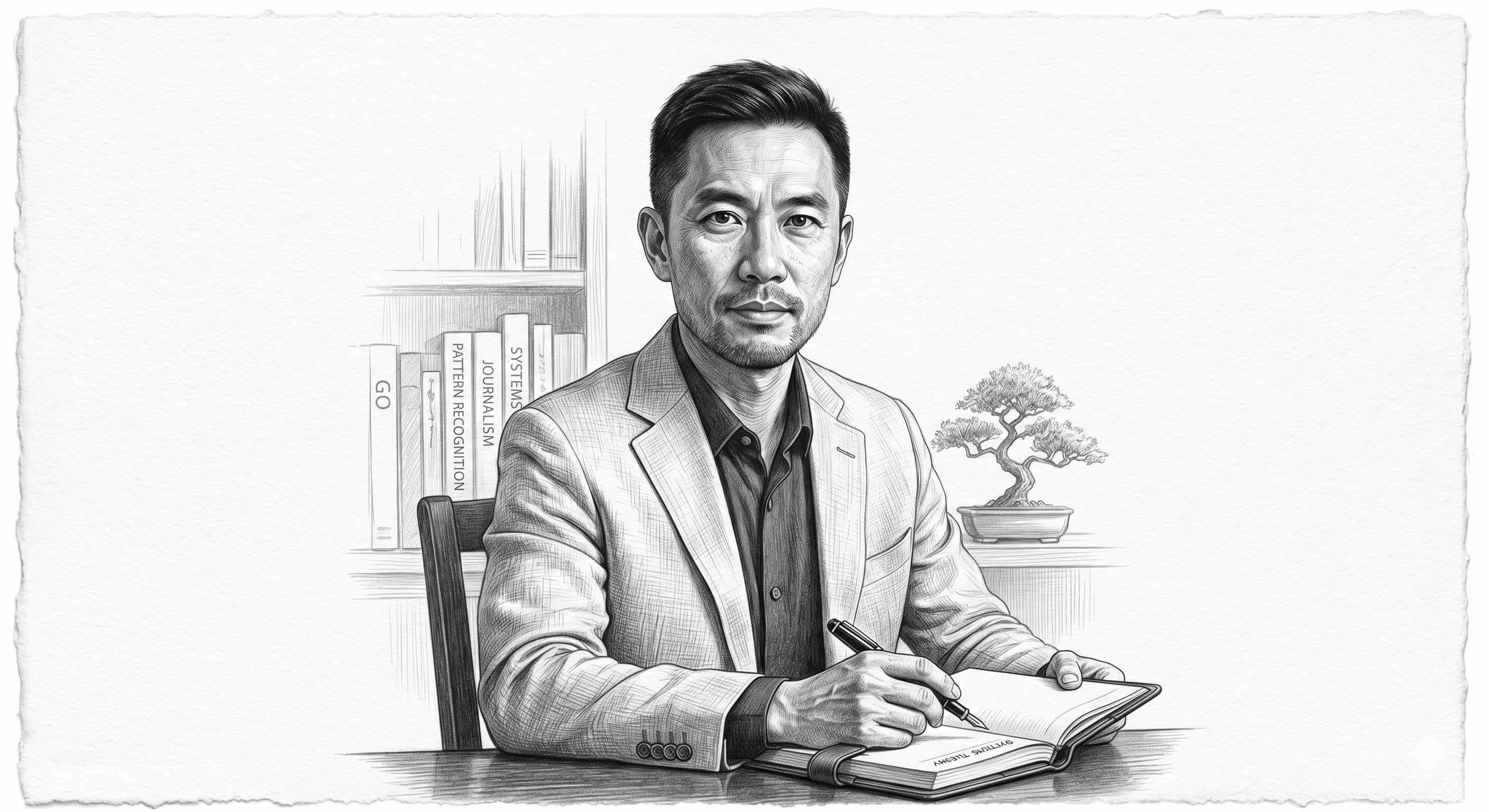
SINGAPORE — Every Sunday morning, I meet a small group of retired engineers in a quiet park in the Jurong district to play Go. In a world of "high-velocity" financial crashes and orbital breaches, Go is a necessary "low-latency" refuge. It is a game of pure logic, where the objective is not to destroy your opponent, but to surround more territory. In many ways, Go is the most accurate model we have for the current strategic behavior of the Caspian Sea Union (CSU).
The APU technocrats often view the world through the lens of Chess—a game of direct conflict, "Kings" and "Queens," and decisive checkmates. They are constantly looking for the "surgical strike" or the "regulatory win." But the CSU is playing Go. They are not interested in a direct confrontation with the APU; they are interested in the slow, clinical "encirclement" of the world's most vital resources. Each new "Jamming Corridor" and each new 'Caspian-Unit' energy contract is a stone placed on the global board, gradually restricting the APU's "Liberty of Movement."
My passion for quantum physics and high-speed rail is driven by the same fascination with "optimized flow." Whether it is a particle, a train, or a data-packet, the objective is the same: to minimize the friction of transit while maximizing the integrity of the signal. "The 'Great Integration' is currently suffering from a 'Complexity-Overhead'," I often observe during my games. We have built a system so complex that its own internal friction is starting to exceed its output. The CSU, by contrast, is simplifying—building a closed, insulated, and highly efficient loop.
As I place a black stone on the board today, I am not thinking about "sovereignty" or "human rights." I am thinking about "territorial efficiency." If the APU wants to survive the 2020s, it must stop trying to win a "Checkmate" that doesn't exist. It must start playing the long game of encirclement. It must secure its own board, stone by stone, through tangible infrastructure rather than digital promises. The game of Go has no "Game Over" screen; it only has a final tally of who holds the most ground. Today, in the park, the tally is close. On the global stage, the stones are still being placed.

